
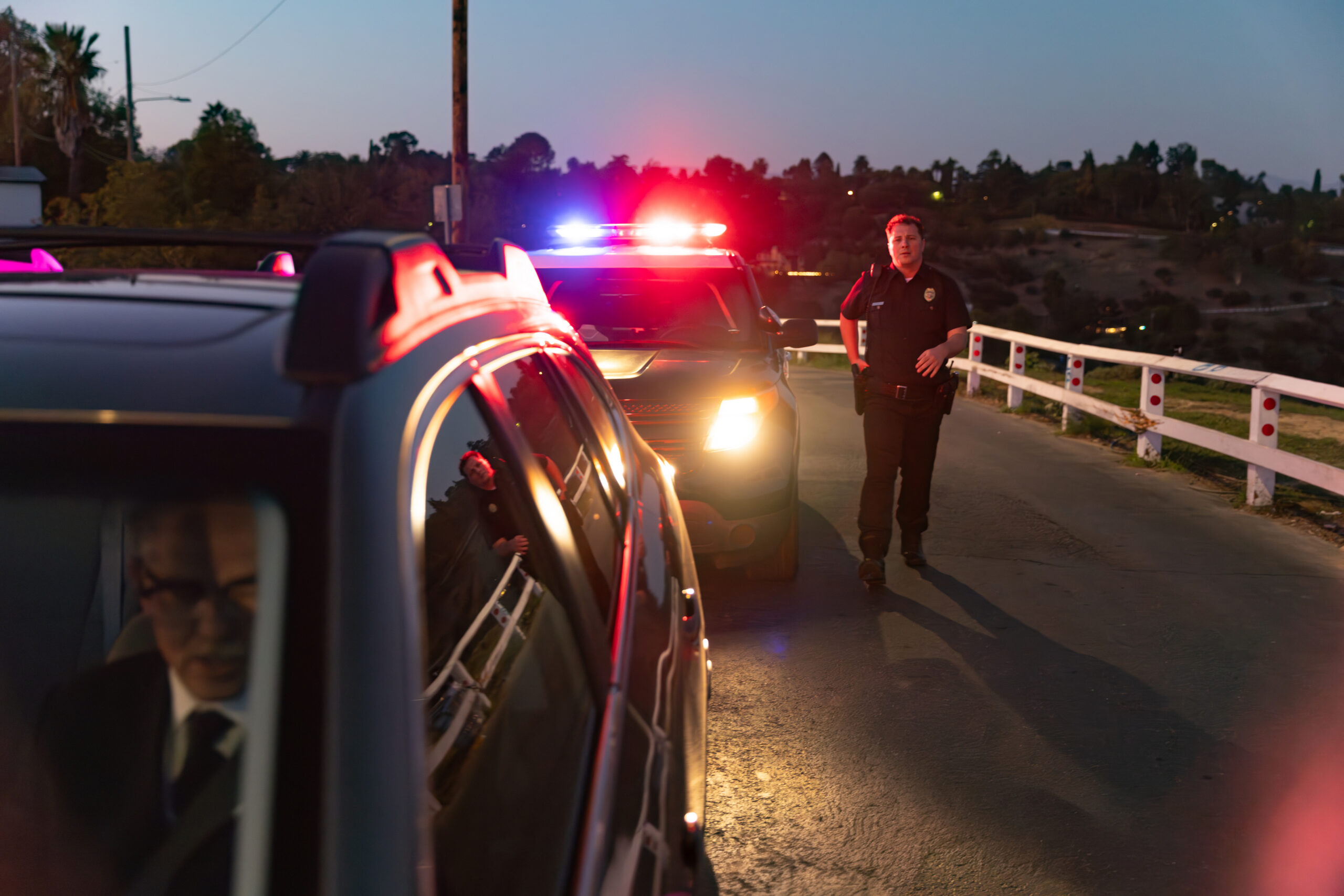
A DWI arrest in New Braunfels often feels like a finished story. When you see the flashing lights of a Comal County Sheriff or a New Braunfels PD cruiser on I-35, it is easy to assume the state has everything it needs to convict you. The reality is that a criminal charge is only the beginning of a high-stakes legal battle.
In Texas, the prosecution must prove you were intoxicated while operating a vehicle in a public place beyond a reasonable doubt, but this is a heavy burden. Many people believe that failing a breath test or stumbling during a roadside walk-and-turn means their case is open and shut. But evidence is often more fragile than it appears.
Our DWI lawyers know how the state builds these cases and where state prosecutors tend to cut corners. Here are seven signs that the evidence against you might be weaker than you think.
1. The Initial Traffic Stop Lacked Reasonable Suspicion
An officer cannot pull you over just because they have a hunch. To initiate a stop, they must have reasonable suspicion that a crime or traffic violation occurred. If you were driving perfectly and the officer stopped you simply because it was late at night near a popular bar in downtown New Braunfels, the stop may be illegal.
If the initial stop is found to be unconstitutional, any evidence gathered afterward, including breath tests and admissions, can often be suppressed. Without that evidence, the state’s case frequently collapses before it ever reaches a jury.
2. Field Sobriety Tests Were Conducted Improperly
Police often use standardized field sobriety tests (SFSTs) to gauge impairment. These include the Horizontal Gaze Nystagmus (HGN), the Walk-and-Turn, and the One-Leg Stand. For these tests to be considered valid indicators of impairment, they must be administered in strict accordance with National Highway Traffic Safety Administration (NHTSA) standards.
If the officer gave unclear instructions, used an uneven surface, or failed to hold the stimulus at the correct distance during the HGN test, the results are compromised. We look for these procedural errors in bodycam and dashcam footage to challenge the reliability of the officer’s observations.
3. Roadside Conditions Affected Your Performance
The environment along a busy road, such as Loop 337 or Highway 46, is not a laboratory. Passing traffic, flashing emergency lights, wind, and uneven pavement can all make a sober person appear impaired.
Anxiety or physical health issues can also play a role. If you have back, knee, or inner ear problems, you may struggle with balance tests regardless of whether you have had a drop to drink. The law requires that your normal use of physical or mental faculties be lost due to alcohol or drugs (Texas Penal Code § 49.01), not due to a physical injury or the stress of being detained.
4. Breath Test Results Are Scientifically Unreliable
Breathalyzers are not infallible machines. They are sensitive instruments that require regular calibration and maintenance. Under the Texas Breath Alcohol Testing Regulations, every aspect of forensic breath testing must be certified by the Department of Public Safety.
Factors like mouth alcohol from a recent burp, certain medical conditions like GERD, or even a low-carb diet can lead to a falsely high reading. If the machine was not maintained or the operator was not properly certified, that 0.08 reading might not hold up in court.
5. Blood Samples Were Mishandled
If the state took a blood sample, the chain of custody is critical. Blood evidence must be drawn by a qualified professional and stored correctly to prevent fermentation or contamination. If there is a gap in the timeline of where that vial went or how it was handled, the integrity of the result is in doubt.
6. The 15-Day ALR Deadline Provides Discovery
In Texas, you only have 15 days from the date you receive notice of suspension (usually the date of arrest) to request an Administrative License Revocation (ALR) hearing. While this hearing is about your driving privileges, it is also a powerful tool for your criminal defense.
This hearing allows us to acquire the actual evidence in the case much sooner and to cross-examine the arresting officer under oath long before a trial begins. If the officer’s testimony at the ALR hearing contradicts their written report, it creates a significant weakness in the prosecution’s case.
7. The Prosecution Relies Solely on Subjective Opinions
Sometimes the state lacks a blood or breath sample. In these cases, prosecutors rely on the officer’s opinion that you were intoxicated, but this is highly subjective. A jury in Comal, Hays, or Guadalupe County may see things differently than the officer did, especially if the video shows you speaking clearly and acting politely.
Why You Need a Trial Attorney in Your Corner
Many defense attorneys are quick to accept the first plea deal the state offers because they are uncomfortable in court. Our attorneys take a different approach. We are trial attorneys who make our living by holding the state to its burden.
Our legal professionals have established relationships with the courts and prosecutors throughout the Hill Country. We know how to push back strategically and understand that criminal charges can jeopardize your career, family, and future. Our legal staff does not delay cases just to collect fees; we move with purpose to get you back to your life.
At Seymour & Vaughn, we believe in clear, honest communication. You deserve to know exactly where your case stands and what your options are. Whether your case is in New Braunfels or San Marcos, we provide the aggressive advocacy required to protect your rights.
We offer free consultations to clients in New Braunfels, Texas, San Marcos, Texas, and the surrounding areas. Our firm uses case-specific fees and flat-fee representation for the pre-file, pre-trial, and trial phases to ensure predictable costs. We also offer flexible payment options and payment plans on a case-by-case basis. If you are ready to fight your DWI, call us today.
New Braunfels: 830-282-4630


